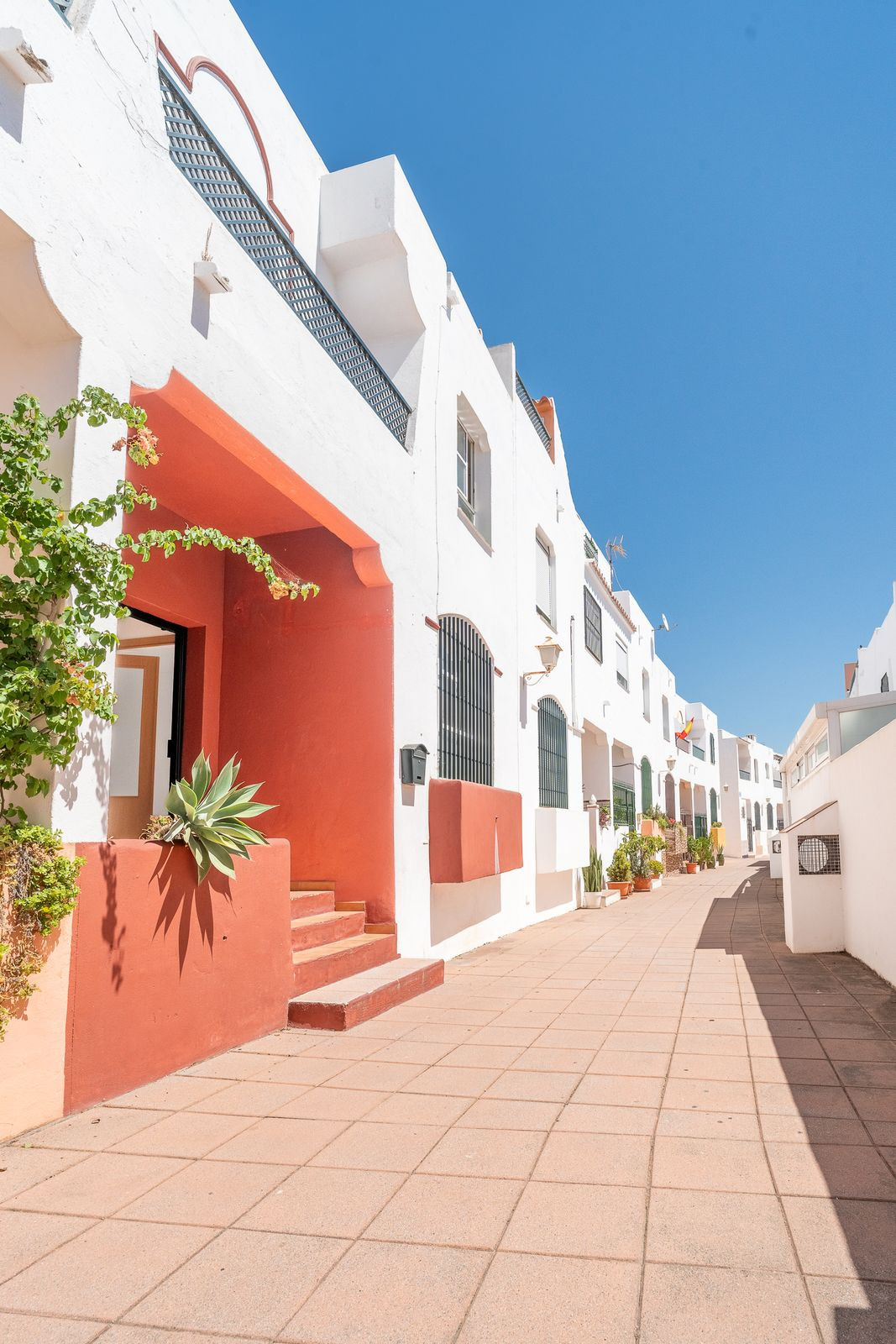

Marbella property ownership and Modelo 210 tax obligations for non-resident owners in Spain during 2026
  • Home
  • News
  • What Non-Resident Owners of Marbella Property Actually Pay on Modelo 210 in 2026
  • 5 Jun 2026
  • info@scmarbella.com

Most international owners of Marbella property buy the home, complete with the notary, and then discover Spain expects an annual tax return whether the property is rented or not. The instrument is Modelo 210, the Spanish non-resident income tax return, and it applies to every non-resident with a property in Spain regardless of nationality, time spent in the country, or whether the home produces income. The amounts are not large for most owners. The administrative cost of getting it wrong, however, compounds quickly, and it remains the single most overlooked ongoing obligation for foreign owners of homes on the Golden Mile, in Sierra Blanca, and across Nueva Andalucia.

This article sets out what a non-resident owner of a Marbella property actually pays in 2026 and how the calculation works for an unrented second home. It also covers what changes when the property is let, the filing rhythm Hacienda expects, and the practical timing that catches new owners out in their first full year of ownership.

The imputed income rule for unused second homes

Spanish tax law treats a non-resident’s holiday home as if it generated a notional rental income, even when the property sits empty. The base figure is the cadastral value of the property, which you can look up by referencia catastral on the public Catastro portal. For most Marbella homes whose cadastral value has been revised in the last decade, the imputed income is set at 1.1 percent of that cadastral value per year. Properties on the older valuation cycle apply 2 percent. The non-resident tax rate then applied to that imputed income is 19 percent for residents of EU and EEA states and 24 percent for everyone else, including UK owners since 2021.

A worked example clarifies the scale. A villa in Sierra Blanca with a cadastral value of 1.8 million euros on the modern cycle generates an imputed base of 19,800 euros. A UK owner pays 24 percent of that, which comes to 4,752 euros for the calendar year. The same property held by a German resident pays 3,762 euros. These are not catastrophic numbers against a multi-million euro asset, but they are not optional, and the Agencia Tributaria has tightened its data matching with the Catastro and with utility providers since 2024.

What changes when the property is let

If the property is rented out, even for part of the year, the imputed income calculation only applies to the months in which the property was empty and available to the owner. The months it was actually let are taxed on the real rental income received. EU and EEA residents may deduct legitimate expenses against that rental income, including community fees, IBI, insurance, mortgage interest, maintenance, and a proportional depreciation allowance. Non-EU residents, including UK and US owners, cannot deduct any expenses. They pay 24 percent on the gross rental income.

The gap between the two regimes is significant. A French owner letting a Nueva Andalucia apartment for 60,000 euros annually with 18,000 euros of allowable expenses pays 19 percent of the 42,000 net, which comes to 7,980 euros. A British owner of the identical property pays 24 percent of the full 60,000, which comes to 14,400 euros, almost double. This is one of the practical consequences of post-Brexit tax status that the resale market has gradually priced into seller expectations on let portfolios.

Filing rhythm and the trap in year one

The filing calendar is the part that most often trips up new owners. Imputed income on an unrented property is declared annually, with the return for the previous calendar year due by 31 December of the following year. Rental income, by contrast, is now declared annually for the calendar year as a whole, with the return due between 1 and 20 January of the following year. This is a change from the quarterly rhythm that applied up to and including the 2023 tax year, and the simplification is one of the few areas where the administrative load on non-resident landlords has eased recently. A buyer completing on a Marbella villa in May 2026 who lets the property over the summer therefore has a single rental Modelo 210 due by 20 January 2027 covering the let months, and a separate imputed-income return due by 31 December 2027 covering the unlet portion of 2026.

Late filing penalties under the current surcharge regime begin at 1 percent of the tax due, with an additional 1 percent added for each full month of delay, capped at 15 percent once more than twelve months elapse, at which point late payment interest also begins to accrue. These voluntary surcharges only apply if the owner files before Hacienda opens a procedure. Once the tax authority initiates an inspection or assessment, the penalty regime moves to a separate scale that starts at 50 percent of the unpaid tax and can rise to 150 percent depending on intent and severity. Most established Marbella firms charge between 150 and 400 euros per Modelo 210 filing, which is a modest premium against the risk of unilateral correction by Hacienda using estimated figures.

Wealth tax, IBI, and how Modelo 210 fits the wider picture

Modelo 210 sits alongside two other recurring property taxes that any Marbella owner needs to plan for. IBI is the municipal real estate tax, billed annually by Marbella Town Hall on the cadastral value, typically falling between 0.4 and 1.1 percent depending on the band. Patrimonio is the Spanish regional wealth tax, and Andalucia applies a 100 percent allowance that wipes the regional liability out for both residents and non-residents holding Spanish-situs assets in the region. The bite at the top end comes instead from the national Impuesto Temporal de Solidaridad de las Grandes Fortunas, the Solidarity Tax, which sits in parallel and applies to net assets above 3 million euros per owner. Introduced in late 2022 as a temporary measure, it has been extended each year since and remains in force for 2026.

For a couple owning a 4 million euro Marbella villa jointly, each owner holds 2 million in Spanish assets. Below the 3 million Solidarity Tax threshold per owner, the running national wealth liability is nil, and the Andalucia bonification cancels the regional Patrimonio bill on the same assets. The position changes once a single owner’s Spanish-situs net wealth crosses 3 million euros, at which point the Solidarity Tax bands begin and run from 1.7 percent up to 3.5 percent in the top tier. Real planning here usually involves how the property is held, whether through individuals, a Spanish SL, or a non-resident company, and the answer depends on the buyer’s wider estate position rather than on Marbella specifics. The Junta de Andalucia property tax pages set out the current Patrimonio framework and the interaction with the national Solidarity Tax.

Practical points for owners completing in 2026

The administrative work is mechanical once set up. Every non-resident owner needs a NIE, which is obtained as part of the purchase process. A Spanish bank account is useful but not strictly required for the filing itself, as Modelo 210 can be paid by SEPA direct debit from any EU account, or by card on the Agencia Tributaria portal. Most owners delegate the recurring filings to their gestor or to the firm that handled the purchase, and we generally suggest this is set up in the same week as completion so the first return is calendared rather than improvised.We have set out the full purchase route in a separate piece on the step-by-step process for non-residents, and the wider context of common legal and tax misconceptions for 2026 buyers covers the assumptions that most often surprise owners in their first ownership year. Treat Modelo 210 as part of the holding cost of the property, alongside IBI, community fees, and insurance. Done in this order, the annual tax position on a Marbella home is straightforward, and the only surprises tend to come from owners who left it until Hacienda asked first.

SC Marbella News

Related Post

Contemporary Marbella resale property with luxury swimming pool and modern apartments on the Costa del Sol
The Resale Market for Contemporary Marbella Property in 2026
Read more
Buying Property in Marbella
Why Some International Buyers Are Choosing Marbella Over Dubai for Lifestyle Property
Read more
Marbella property ownership and Modelo 210 tax obligations for non-resident owners in Spain during 2026
  • Home
  • News
  • What Non-Resident Owners of Marbella Property Actually Pay on Modelo 210 in 2026

What Non-Resident Owners of Marbella Property Actually Pay on Modelo 210 in 2026

Most international owners of Marbella property buy the home, complete with the notary, and then discover Spain expects an annual tax return whether the property is rented or not. The instrument is Modelo 210, the Spanish non-resident income tax return, and it applies to every non-resident with a property in Spain regardless of nationality, time spent in the country, or whether the home produces income. The amounts are not large for most owners. The administrative cost of getting it wrong, however, compounds quickly, and it remains the single most overlooked ongoing obligation for foreign owners of homes on the Golden Mile, in Sierra Blanca, and across Nueva Andalucia.

This article sets out what a non-resident owner of a Marbella property actually pays in 2026 and how the calculation works for an unrented second home. It also covers what changes when the property is let, the filing rhythm Hacienda expects, and the practical timing that catches new owners out in their first full year of ownership.

The imputed income rule for unused second homes

Spanish tax law treats a non-resident’s holiday home as if it generated a notional rental income, even when the property sits empty. The base figure is the cadastral value of the property, which you can look up by referencia catastral on the public Catastro portal. For most Marbella homes whose cadastral value has been revised in the last decade, the imputed income is set at 1.1 percent of that cadastral value per year. Properties on the older valuation cycle apply 2 percent. The non-resident tax rate then applied to that imputed income is 19 percent for residents of EU and EEA states and 24 percent for everyone else, including UK owners since 2021.

A worked example clarifies the scale. A villa in Sierra Blanca with a cadastral value of 1.8 million euros on the modern cycle generates an imputed base of 19,800 euros. A UK owner pays 24 percent of that, which comes to 4,752 euros for the calendar year. The same property held by a German resident pays 3,762 euros. These are not catastrophic numbers against a multi-million euro asset, but they are not optional, and the Agencia Tributaria has tightened its data matching with the Catastro and with utility providers since 2024.

What changes when the property is let

If the property is rented out, even for part of the year, the imputed income calculation only applies to the months in which the property was empty and available to the owner. The months it was actually let are taxed on the real rental income received. EU and EEA residents may deduct legitimate expenses against that rental income, including community fees, IBI, insurance, mortgage interest, maintenance, and a proportional depreciation allowance. Non-EU residents, including UK and US owners, cannot deduct any expenses. They pay 24 percent on the gross rental income.

The gap between the two regimes is significant. A French owner letting a Nueva Andalucia apartment for 60,000 euros annually with 18,000 euros of allowable expenses pays 19 percent of the 42,000 net, which comes to 7,980 euros. A British owner of the identical property pays 24 percent of the full 60,000, which comes to 14,400 euros, almost double. This is one of the practical consequences of post-Brexit tax status that the resale market has gradually priced into seller expectations on let portfolios.

Filing rhythm and the trap in year one

The filing calendar is the part that most often trips up new owners. Imputed income on an unrented property is declared annually, with the return for the previous calendar year due by 31 December of the following year. Rental income, by contrast, is now declared annually for the calendar year as a whole, with the return due between 1 and 20 January of the following year. This is a change from the quarterly rhythm that applied up to and including the 2023 tax year, and the simplification is one of the few areas where the administrative load on non-resident landlords has eased recently. A buyer completing on a Marbella villa in May 2026 who lets the property over the summer therefore has a single rental Modelo 210 due by 20 January 2027 covering the let months, and a separate imputed-income return due by 31 December 2027 covering the unlet portion of 2026.

Late filing penalties under the current surcharge regime begin at 1 percent of the tax due, with an additional 1 percent added for each full month of delay, capped at 15 percent once more than twelve months elapse, at which point late payment interest also begins to accrue. These voluntary surcharges only apply if the owner files before Hacienda opens a procedure. Once the tax authority initiates an inspection or assessment, the penalty regime moves to a separate scale that starts at 50 percent of the unpaid tax and can rise to 150 percent depending on intent and severity. Most established Marbella firms charge between 150 and 400 euros per Modelo 210 filing, which is a modest premium against the risk of unilateral correction by Hacienda using estimated figures.

Wealth tax, IBI, and how Modelo 210 fits the wider picture

Modelo 210 sits alongside two other recurring property taxes that any Marbella owner needs to plan for. IBI is the municipal real estate tax, billed annually by Marbella Town Hall on the cadastral value, typically falling between 0.4 and 1.1 percent depending on the band. Patrimonio is the Spanish regional wealth tax, and Andalucia applies a 100 percent allowance that wipes the regional liability out for both residents and non-residents holding Spanish-situs assets in the region. The bite at the top end comes instead from the national Impuesto Temporal de Solidaridad de las Grandes Fortunas, the Solidarity Tax, which sits in parallel and applies to net assets above 3 million euros per owner. Introduced in late 2022 as a temporary measure, it has been extended each year since and remains in force for 2026.

For a couple owning a 4 million euro Marbella villa jointly, each owner holds 2 million in Spanish assets. Below the 3 million Solidarity Tax threshold per owner, the running national wealth liability is nil, and the Andalucia bonification cancels the regional Patrimonio bill on the same assets. The position changes once a single owner’s Spanish-situs net wealth crosses 3 million euros, at which point the Solidarity Tax bands begin and run from 1.7 percent up to 3.5 percent in the top tier. Real planning here usually involves how the property is held, whether through individuals, a Spanish SL, or a non-resident company, and the answer depends on the buyer’s wider estate position rather than on Marbella specifics. The Junta de Andalucia property tax pages set out the current Patrimonio framework and the interaction with the national Solidarity Tax.

Practical points for owners completing in 2026

The administrative work is mechanical once set up. Every non-resident owner needs a NIE, which is obtained as part of the purchase process. A Spanish bank account is useful but not strictly required for the filing itself, as Modelo 210 can be paid by SEPA direct debit from any EU account, or by card on the Agencia Tributaria portal. Most owners delegate the recurring filings to their gestor or to the firm that handled the purchase, and we generally suggest this is set up in the same week as completion so the first return is calendared rather than improvised.We have set out the full purchase route in a separate piece on the step-by-step process for non-residents, and the wider context of common legal and tax misconceptions for 2026 buyers covers the assumptions that most often surprise owners in their first ownership year. Treat Modelo 210 as part of the holding cost of the property, alongside IBI, community fees, and insurance. Done in this order, the annual tax position on a Marbella home is straightforward, and the only surprises tend to come from owners who left it until Hacienda asked first.

Similar news

Contemporary Marbella resale property with luxury swimming pool and modern apartments on the Costa del Sol
The Resale Market for Contemporary Marbella Property in 2026
Read more
Buying Property in Marbella
Why Some International Buyers Are Choosing Marbella Over Dubai for Lifestyle Property
Read more

Sign Up to Our Newsletter

Subscribe to our newsletter for the latest contemporary homes, market insights, and lifestyle trends on the Costa del Sol.