


A buyer assessing a contemporary apartment in Nueva Andalucia, a villa in a gated estate above the Golden Mile, or a branded residence in one of the new resort schemes will spend most of their attention on the unit itself. The specification, the orientation, the view and the price per square metre are where the decision feels like it is being made. Yet at the prime end of the Marbella market a large share of the long-term ownership experience is governed not by the property but by the community it sits inside, the comunidad de propietarios, and that community is one of the least examined factors in an otherwise careful purchase.
This article sets out what the comunidad de propietarios actually is, how it shapes the running and the resale of a contemporary Marbella home, and the checks a 2026 buyer should run on it before committing. It is not a reason to avoid gated developments. It is simply the part of Spanish ownership that international buyers most often assume works like a service charge at home, when in practice it is closer to a small self-governing entity the owner becomes a member of on completion.
What the comunidad de propietarios is
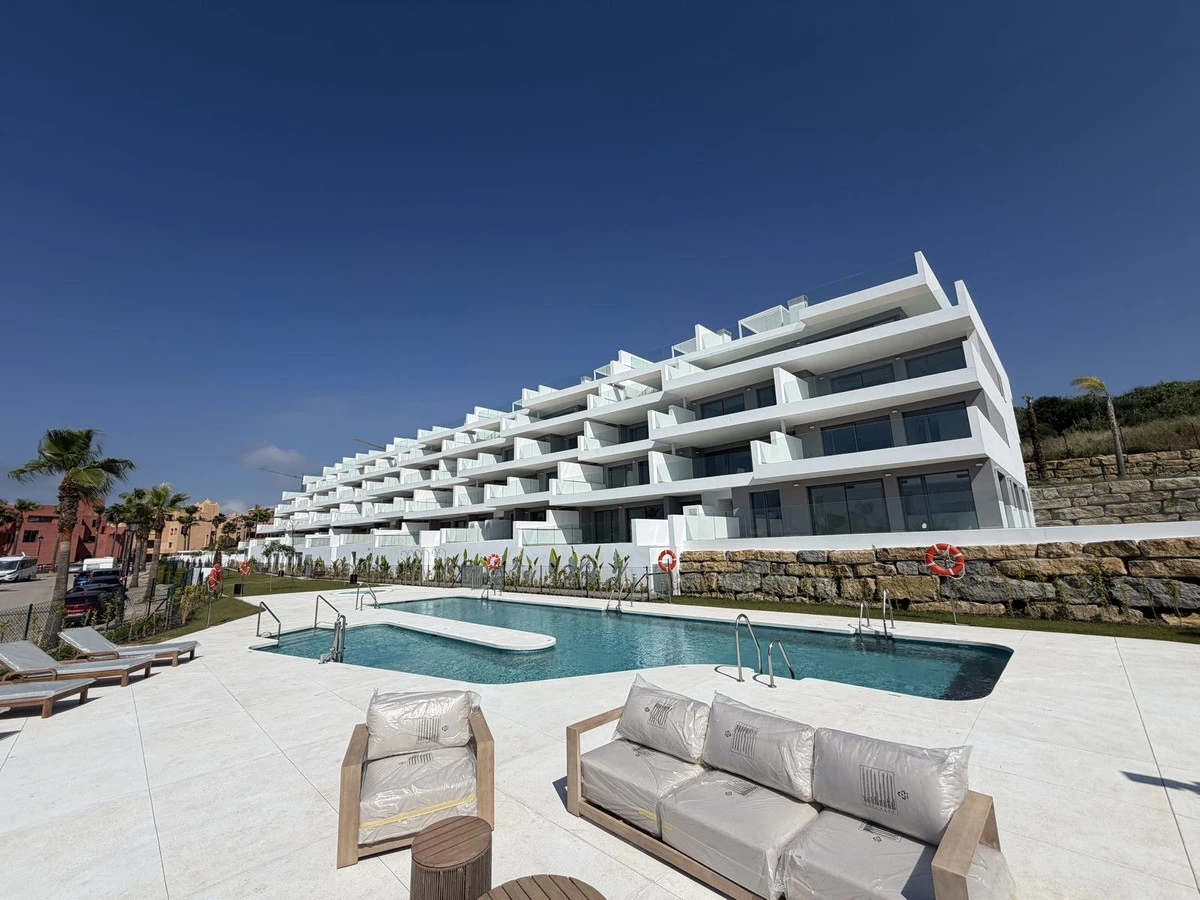
Almost every apartment block, gated villa estate and branded residence in Marbella is organised as a comunidad de propietarios, a community of owners governed by the Spanish Horizontal Property Law. On completion the buyer automatically becomes a member, with a defined share of the common elements expressed as a coefficient, the cuota de participacion, set out in the founding deed. That coefficient determines the owner’s voting weight at the annual meeting and the proportion of the budget they are liable for. The community owns and maintains everything shared, which on a contemporary scheme can mean landscaped grounds, private roads, gatehouse security, a communal pool and spa, lifts, and increasingly an energy plant and electric vehicle charging infrastructure.
The community sets an annual budget at its general meeting and divides it among owners by coefficient, collected as the community fee. On a high-specification development these fees fund a standard of upkeep that is itself part of what the buyer is paying for, since a poorly run community visibly erodes a luxury address within a few years. The point a buyer needs to grasp is that the fee is not a fixed service price set by a managing agent. It is a budget voted by the owners.
How fees scale at the prime end
Community fees vary widely with the level of shared amenity rather than with the price of the unit. A contemporary apartment in a well-run Nueva Andalucia development with a concierge, gym, communal pool and gardens commonly carries fees in the region of 3,000 to 8,000 euros a year. A unit in a gated estate with manned security, extensive landscaping and resort-style facilities runs materially higher, and branded residences attached to a hotel operator, of the kind arriving with schemes such as the Waldorf Astoria Marbella, sit higher still because the service standard is contractually tied to the brand. These figures are separate from the owner’s own IBI, paid to Marbella Town Hall, and from utilities and insurance, and a buyer should treat the community fee as a distinct recurring line in the holding cost.
The relevant question is not simply whether the fee is high or low, but whether it is proportionate to what the community delivers and whether it is being collected and spent competently. A suspiciously low fee on a development with significant shared infrastructure is often a warning rather than a saving, because it usually means maintenance is under-funded and renewal deferred, which surfaces later as a special levy.
The derrama and the reserve fund
The single most important concept for a buyer to understand is the derrama, the special levy a community raises when the ordinary budget does not cover a major item of expenditure. Re-roofing a block, replacing lifts, resurfacing private roads, refurbishing a communal pool or upgrading a security system are all derrama events, charged to owners by coefficient on top of the normal fee. On a large contemporary scheme a derrama can run into tens of thousands of euros for a single owner, and it falls on whoever owns the unit when the levy is approved, not on whoever owned it when the underlying wear occurred.
Spanish law requires every community to hold a reserve fund, the fondo de reserva, of at least ten per cent of its last ordinary annual budget (raised from five per cent in 2019), intended to cushion exactly these costs. A well-managed prime community holds considerably more, and the health of that reserve is a direct read on whether the buyer is walking into an imminent levy. A community with a thin reserve and an ageing communal plant is one where a derrama is a question of when rather than whether, and that exposure should be priced into the offer.
The checks to run before committing
- Obtain the minutes of the last two or three annual general meetings, which reveal disputes, planned works, approved or anticipated derramas, and the general competence of the administration.
- Request the current community budget and the reserve fund balance, and judge whether the reserve is healthy relative to the age and the shared infrastructure of the development.
- Require a certificate from the community administrator confirming the seller is up to date on fees, since unpaid community debt attaches to the property and can pass to the buyer for the current year and the three preceding years.
- Confirm the cuota de participacion for the specific unit, as it sets both the share of every future cost and the voting weight at the meeting.
- Establish whether any major works are already voted or under discussion, so the cost of an approved derrama is reflected in the price rather than discovered after completion.
Why community quality shows up at resale
A well-run community is an asset that compounds quietly, and a badly run one is a discount that grows. At resale the buyer’s lawyer will request the same minutes and certificates, so a history of unresolved disputes, recurring levies or a depleted reserve becomes visible to the next purchaser and weighs on both the price and the time to sell. A development with disciplined finances, a funded reserve and a record of orderly decision-making presents as a confident purchase, and at the contemporary end of the market that institutional quality increasingly distinguishes one address from another across the field set out in the ten most exclusive luxury areas in Marbella.
Surface and plot detail, which a buyer can cross-reference through the Sede Electronica del Catastro, describe the property itself. The comunidad describes the environment the property lives in, and on a gated estate or a branded residence that environment is a large part of the value. A buyer who reads the community as carefully as the floor plan is the one least likely to be surprised in early ownership.
Where this leaves a 2026 buyer
The comunidad de propietarios does not change which home a buyer wants. It changes whether the ongoing cost and the long-term condition of the address are understood before completion rather than after it. On contemporary apartments, gated villas and branded residences alike, the community is part of the asset, and the diligence on it belongs alongside the diligence on title and price.
The practical takeaway is to request the minutes, the budget and the reserve position early, and to weigh them as seriously as the specification of the unit. A buyer who wants the full acquisition sequence laid out can follow our step by step process for non residents. If you would like help identifying contemporary apartments, gated villas and branded residences in Marbella that stand up to this level of scrutiny, or current insight into where the prime market is moving in 2026, we are glad to assist, and the community documentation is best reviewed by your own lawyer before you commit.
- SHARE

- Enlace copiado al portapapeles. ¡Pégalo en tu Story o DM de Instagram!
SC Marbella News
Related Post
 previous
